Last updated September 24, 2026
New windows and doors improve comfort, cut energy bills and add long-term value to your home. Sightline Windows & Doors Lauderdale Lakes pairs proven product lines with our own installing crews for lasting performance - and a price we put in writing.
1. Choose your installer
The unit is half the job - the install is the other half. Our own background-checked crews measure, set, seal and insulate every opening, and they know the lines we quote inside and out because they install them every week.
2. Select the right products
Compare styles, materials and glass packages side by side until the fit is right for your rooms, your budget and your goals. The product-line comparison below is the place to start.
3. Prepare your home for install
Before install day we walk you through a short checklist - furniture pulled back, treatments down, a clear path to each opening - so install day is watch-it-happen, not scramble.
Compare the Lines We Quote
Every project is priced on the same lines, side by side - the price indicators below are relative, and your consultant shows exact numbers on your actual openings.
PGTThe line Florida homeowners arrive naming - the most Miami-Dade certifications in the industry$$$
- More Miami-Dade NOA certifications than any other line we quote
- WinGuard, EnergyVue and ClassicVue Max systems built for every wind zone
- 99% on-time delivery keeps your install date on the calendar
CGIThe heavyweight impact line$$$$$
- Large-missile impact ratings for the strictest wind zones
- Architectural-grade aluminum with commercial-depth frames
- The line we quote when protection is the whole point
CWSThe Florida value pick$$
- Vinyl systems built in Florida for Florida codes
- Strong energy packages at the friendliest price point
- The smart start for whole-home replacements on a budget
ESWSlim lines, big glass$$$$
- Narrow-sightline aluminum for modern elevations
- Oversized openings and floor-to-ceiling glass
- Impact-rated without the bunker look
ECOThe aluminum impact workhorse$$$
- Miami-built aluminum impact systems
- A strong price-to-protection ratio for coastal homes
- Proven inventory lines with short lead times
Windows & Doors Warning Signs: A Lauderdale Lakes Homeowner’s Reference Guide
A 1mm gap between an impact window frame and its rough opening buck is not cosmetic. At Lauderdale Lakes’s design wind pressure of 45 PSF, that gap is enough to allow frame racking that can unseat the glazing bead and breach the weather barrier in a Category 2 storm. The warning signs that matter here are not the dramatic ones - a shattered pane is obvious - but the 11 quiet indicators that appear six to 18 months before a window or door fails structurally. Each ties to a specific South Florida failure mode. This reference gives Lauderdale Lakes homeowners a way to catch those indicators with tools already in the house: a lit incense stick, a garden hose, a flashlight, and a credit card.
Quick Answer
The critical warning signs of window and door failure in Lauderdale Lakes include: condensation between glass panes (seal failure), visible smoke deflection at frame gaps (air infiltration exceeding 0.5 cfm), water pooling at door thresholds during hose testing, stucco cracks angling 45 degrees or greater from opening corners (differential settlement), and galvanic corrosion on aluminum hardware (not bronze oxidation, which is surface-only). These indicators appear well before structural failure and can be verified with household items. Catching them early separates a $200 sweep replacement from a $4,000+ frame-and-sash replacement.
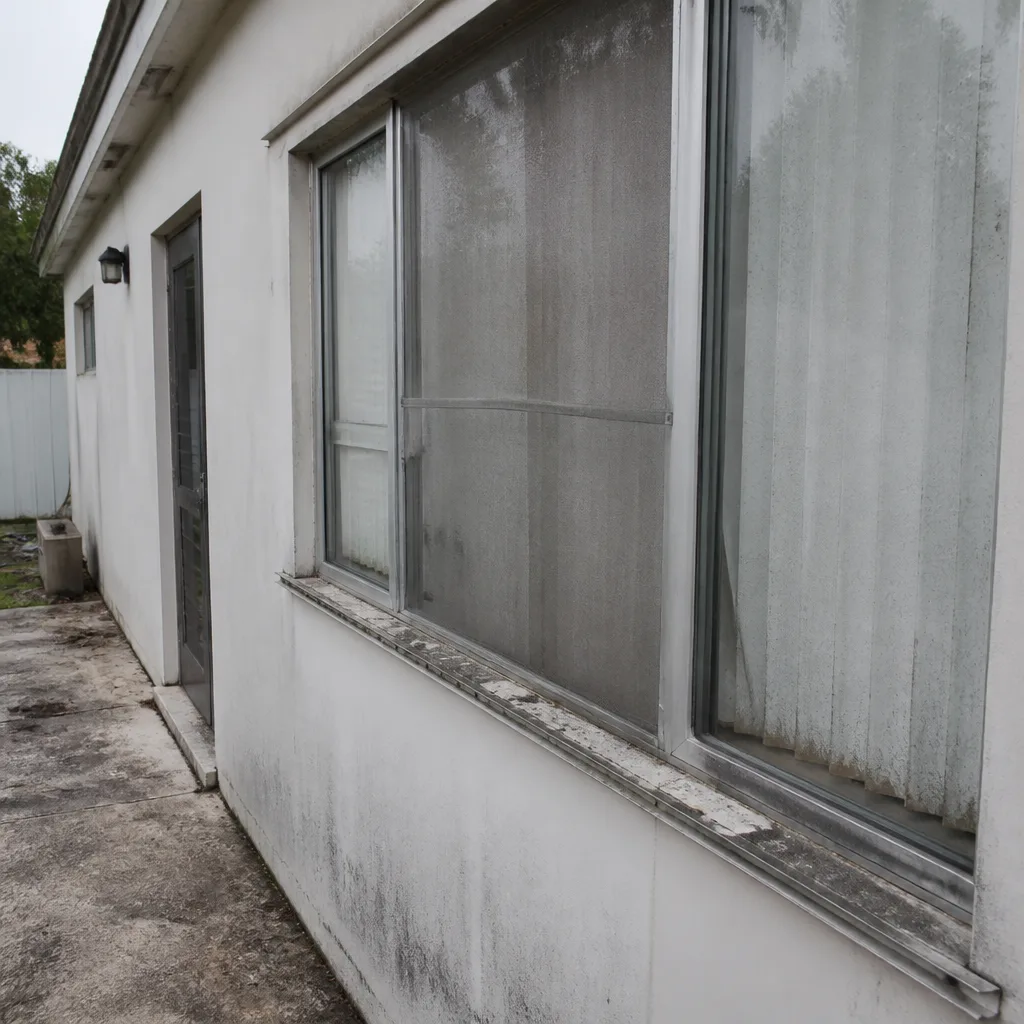 Before
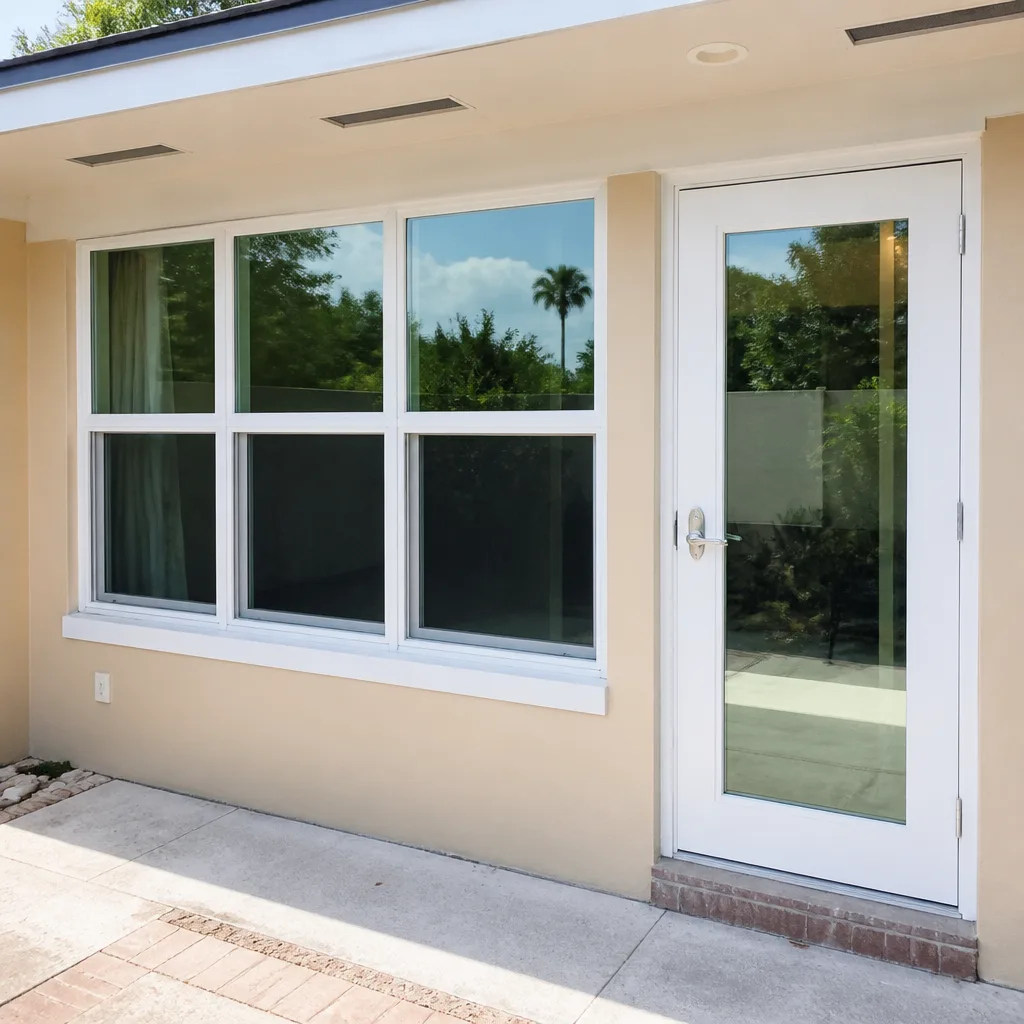 After
AfterTable of Contents
- The Condensation Location Test: What Moisture Tells You
- How to Test Frame-to-Opening Sealant Failure with an Incense Stick
- The Door-Threshold Water Test: Pass, Fail, and What Each Means
- Hardware Warning Signs: Bronze Oxidation vs. Galvanic Corrosion
- Reading Stucco Crack Patterns Around Frames
- Glass and Glazing Failures Specific to South Florida
- Operational Warning Signs: Sashes, Locks, and Tracks
- Common Mistakes to Avoid
- When to Call a Professional
- Frequently Asked Questions
- The Bottom Line
The Condensation Location Test: What Moisture Tells You

Condensation is not one problem. It is three different problems, and the location of the moisture tells you which one you have. Misreading the location is the most common diagnostic error we see in Lauderdale Lakes homes, and it leads to the wrong repair scope and the wrong price.
Condensation on the interior glass surface means the indoor humidity is high and the glass surface temperature is below the dew point. In Lauderdale Lakes, this happens most often in January and February when overnight lows dip into the 50s and homeowners run heat for the first time in months. The glass is not failed. The window is not failed. The solution is humidity control - a dehumidifier set to 50% relative humidity, or improved exhaust ventilation in kitchens and baths. We see this pattern frequently in the older ranch homes west of State Road 7, where original jalousie windows have been replaced with fixed picture units but the bathroom exhaust was never upgraded.
Condensation between the panes means the insulated glass unit (IGU) seal has failed and the argon or krypton gas has escaped. The window is no longer insulating. In South Florida’s cooling-dominated climate, this costs money year-round, not just in winter. The IGU must be replaced. The frame can stay if it is sound. Replacement IGUs for standard sizes run $180-$340 installed in the Lauderdale Lakes market. Custom sizes or impact-rated units run higher. Window replacement in Lauderdale Lakes becomes the better option when the frame is also aged or when the failed unit is one of several in a bank of windows.
Condensation on the frame itself, particularly on the interior face of an aluminum frame, indicates thermal break failure. The polyamide strip that separates interior and exterior aluminum extrusions has degraded or was never present in older non-thermally-broken frames. The frame is conducting exterior temperature directly to the interior surface. This is not repairable. The frame must be replaced. In Lauderdale Lakes’s humid climate, persistent frame condensation also breeds mold on drywall returns, which is why we document it with photos on every survey.
The test is simple. On a morning when condensation is present, note which surface holds the moisture. Interior glass: humidity. Between panes: seal failure. Frame: thermal break failure. Each has a different repair path and a different price.
How to Test Frame-to-Opening Sealant Failure with an Incense Stick
Frame-to-opening sealant failure is invisible until it is catastrophic. The gap allows unconditioned air infiltration, water intrusion during wind-driven rain, and - in an impact-rated assembly - pressure equalization failure that can blow the glazing bead out of its track. The incense stick test detects this gap before water stains appear on the drywall.
When to run the test: Choose a day with wind under 5 mph, ideally early morning before thermal stacking effects begin. Close all windows and doors, and run the central air or a vent fan to create slight negative pressure in the house.
- Light a stick of incense. Standard sandalwood or unscented utility incense works; scented candles do not produce a thin enough smoke stream.
- Hold the lit end 1/2 inch from the frame-to-wall joint, moving slowly around the entire perimeter of the window or door.
- Watch the smoke stream. A tight seal produces a vertical, undisturbed plume.
- Any visible deflection of the smoke stream - bending toward or away from the gap - indicates air movement through the sealant joint.
- Mark deflection points with painter’s tape. A single point of deflection suggests a local sealant void. Deflection around more than 50% of the perimeter indicates systemic failure of the backer rod and sealant installation.
The measurement threshold that demands immediate replacement is visible smoke deflection at any point on an impact-rated assembly. Florida Building Code requires impact openings to maintain continuous air and water barriers. A gap that passes smoke will pass water under 45 PSF wind pressure, which is the design load for Lauderdale Lakes.
Repair scope depends on extent. Localized voids: remove and replace sealant with backer rod and approved sealant compatible with the frame material. Systemic failure: the frame may need reinstallation with proper shimming and fastening, or full replacement if the frame has racked out of square. We document this with a measured survey the homeowner keeps, and the written quote references the specific clause in Florida Building Code TAS 201 that the repair must meet.
The Door-Threshold Water Test: Pass, Fail, and What Each Means
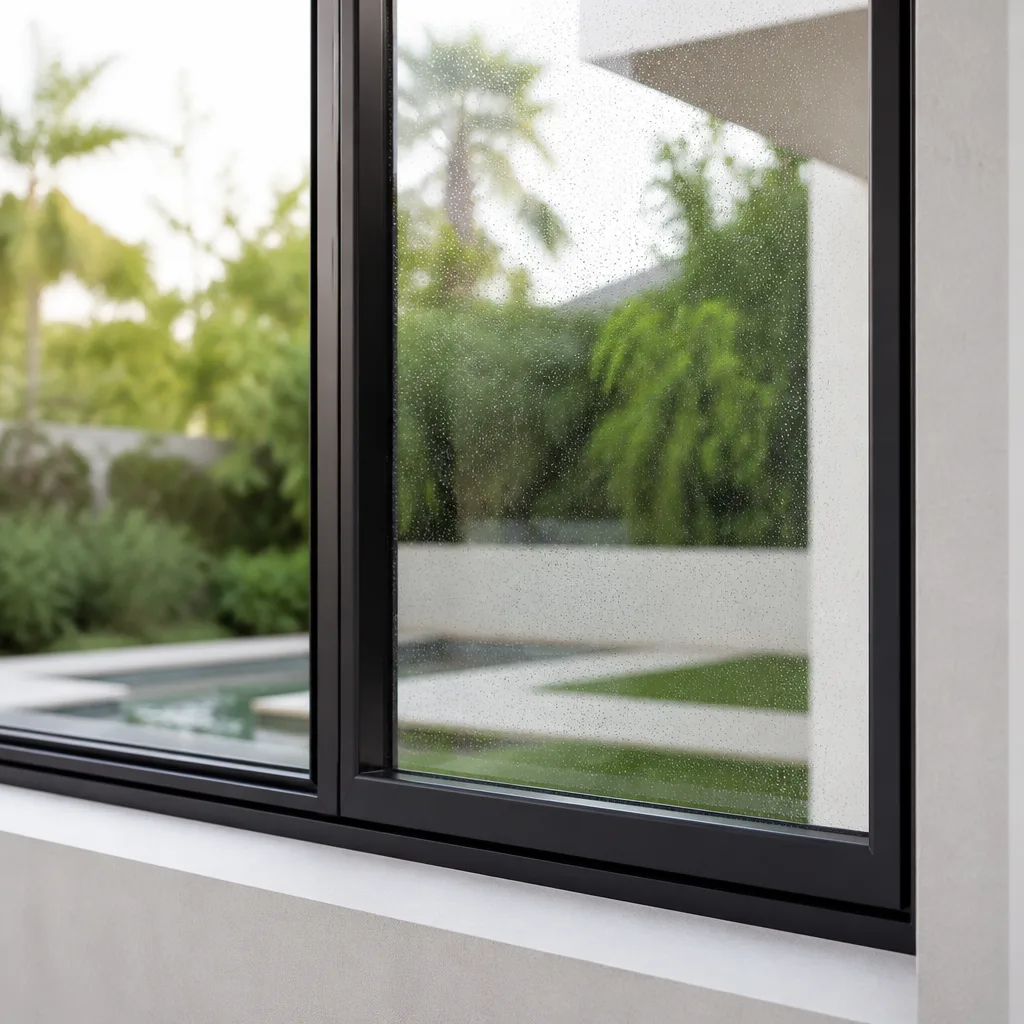
Thresholds are the most abused component of any door assembly in South Florida. They take foot traffic, direct sun, wind-driven rain, and - in many Lauderdale Lakes homes - pressure washing directed at the base of the door. The water test separates a $45 sweep replacement from a $2,800 threshold and sill replacement.
Test setup: Wait 48 hours after rain. The substrate must be dry to isolate threshold performance. Close and lock the door. Tape a plastic sheet to the interior side of the threshold to catch any water that penetrates.
- Attach a spray nozzle to a garden hose set to “fan” or “shower” - not jet.
- Spray the exterior face of the threshold for two minutes, simulating moderate wind-driven rain at approximately 15 mph. Hold the nozzle 18 inches from the surface.
- Stop spraying. Wait five minutes. Inspect the plastic sheet and the interior floor immediately inside the threshold.
Pass: No water on the plastic sheet or floor. The threshold, sweep, and sill pan are functioning. The door is safe to keep.
Fail, Category A - water at the door bottom but not past the interior floor: The sweep or weatherstrip is degraded. Replacement cost in Lauderdale Lakes: $35-$85 for standard sweeps, $120-$220 for integrated sweep-and-shoe assemblies on patio doors. This is maintenance, not structural repair.
Fail, Category B - water past the threshold onto the interior floor: The threshold is not draining to the exterior, or the sill pan is breached, or the frame-to-sill joint has failed. This is structural. The threshold may need replacement, the sill pan may need reconstruction, and the subfloor may be damaged. In concrete-slab construction common in Lauderdale Lakes’s 1960s-1980s housing stock, water pooling at the slab edge can wick upward and deteriorate the bottom plate of the wall framing. Category B failures require professional evaluation.
Fail, Category C - water from the sides or top of the frame: This is not a threshold problem. The frame-to-opening sealant has failed, or the door is out of square and the weatherstrip is not compressing evenly. Check with the incense stick test above.
We run this test on every door installation in Lauderdale Lakes as part of our final evidence documentation. The homeowner receives photos of the dry interior after the test.
Hardware Warning Signs: Bronze Oxidation vs. Galvanic Corrosion
South Florida’s salt air creates two visually similar corrosion types on window and door hardware. One is surface-only and cosmetic. The other progresses four times faster, undermines structural integrity, and requires frame replacement. Telling them apart saves thousands.
Bronze oxidation appears on solid bronze or brass hardware - handles, escutcheons, hinges - as a green or brown patina. It is a surface reaction between copper in the alloy and atmospheric oxygen. It does not penetrate. It does not weaken the metal. On PGT and CGI hardware, this patina is expected in coastal Florida and is often left untreated by homeowners who prefer the aged appearance. If removal is desired, a brass cleaner and a soft cloth restore the original finish. Bronze oxidation is not a failure.
Galvanic corrosion appears on aluminum frames and hardware as a white, powdery bloom or as pitting with white residue in the pits. It is an electrochemical reaction between dissimilar metals - typically aluminum and stainless steel fasteners, or aluminum and copper wiring in the wall - in the presence of an electrolyte, which in Lauderdale Lakes is salt-laden humidity. The aluminum sacrifices itself to protect the more noble metal. The aluminum pitting deepens. The structural section is reduced. The anodized or painted finish is breached, accelerating the cycle.
The progression rate is the critical difference. Bronze oxidation stabilizes. Galvanic corrosion accelerates. In our documentation from Lauderdale Lakes homes within five miles of the coast, we have measured pit depths increasing 0.3mm per year on untreated galvanic corrosion sites. On a 2.0mm wall-thickness aluminum extrusion, that is structural failure in under seven years.
The test: wipe the affected area with a white cloth dampened with distilled water. Bronze oxidation leaves green or brown residue. Galvanic corrosion leaves white or gray residue. If the surface beneath is pitted, not smooth, the diagnosis is galvanic corrosion and the hardware or frame component must be replaced. Cleaning does not stop the reaction.
Prevention at replacement: specify hardware and fasteners of the same base metal, or with isolating coatings. The window installation in Lauderdale Lakes that meets Miami-Dade HVHZ standards uses stainless steel fasteners with stainless steel reinforcement channels, or coated fasteners with nylon isolation washers. We specify this on every quote.
Reading Stucco Crack Patterns Around Frames
Cracks in stucco at window and door frames are common in Lauderdale Lakes. Most are benign. Some indicate foundation or structural movement that threatens the opening itself. The distinction is the angle of the crack relative to the corner of the opening.
Normal thermal movement cracks run vertically or horizontally, parallel to the frame edge, within 1/4 inch of the frame. They are caused by differential expansion between the vinyl or aluminum frame and the stucco substrate as daily temperatures swing 15-20 degrees. These cracks are typically hairline, stable, and addressed with elastomeric sealant during routine maintenance. They do not indicate frame failure.
Differential settlement cracks angle 45 degrees or greater from the corner of the opening, extending diagonally into the wall field. They indicate that one side of the opening is moving relative to the other - foundation settlement, slab heave, or structural load transfer failure. These cracks widen over time. They transmit stress into the frame, racking it out of square, which then causes operational problems (sashes that bind, locks that don’t engage) and sealant failure.
The measurement: use a straightedge aligned with the frame edge. If the crack intersects the straightedge at less than 45 degrees, it is likely thermal. If 45 degrees or greater, or if it extends more than 6 inches from the corner into the wall field, it warrants structural evaluation before window or door replacement.
Getting this wrong is expensive. Replacing a window in a racked opening without addressing the settlement guarantees sealant failure within two years. Conversely, calling a structural engineer for a thermal crack wastes $800-$1,200. We photograph and measure crack angles on every survey, and we note whether the crack is active (wider at one end, fresh debris in the gap) or dormant.
In Lauderdale Lakes’s sandy soils, particularly in the areas east of Florida’s Turnpike where fill was used in 1970s development, we see more settlement-related cracking than in the western areas with native limestone substrate. This is local knowledge that shapes our replacement scope.
Glass and Glazing Failures Specific to South Florida
Glass failure in South Florida is not primarily about thermal stress breakage, as it is in desert climates. It is about impact fatigue, seal degradation from UV and heat, and pressure cycling from tropical systems. The warning signs are specific.
Impact fatigue: Impact-rated laminated glass does not shatter in the conventional sense. It cracks in a spiderweb pattern but remains in the frame. Repeated stress from pressure cycling - tropical storm bands, not just direct hurricane hits - can delaminate the interlayer, creating a milky or cloudy appearance at the crack lines. This is a failure. The lite must be replaced. The frame may be sound if the glazing bead and anchors held. We see this pattern in homes that weathered Hurricane Irma in 2017; the glass held then but is showing interlayer degradation now, seven years later.
Seal degradation: The edge seal of an IGU is a butyl primary seal and a polysulfide or silicone secondary seal. South Florida’s UV exposure and daily heat cycling degrade the secondary seal first, causing it to chalk and crack. When the primary seal fails, moisture enters. The warning sign is a foggy or hazy band visible at the perimeter of the glass, 1/2 to 1 inch from the edge, before the full-pane condensation appears. This perimeter haze means seal failure is underway and full fogging is 6-18 months away. Replacement can be scheduled before the view is fully obscured.
Pressure cycling damage to glazing beads: The glazing bead is the vinyl or rubber strip that retains the glass in the frame. In impact-rated assemblies, it is part of the pressure-equalization system. Repeated pressure cycling can compress the bead permanently, reducing its grip. The warning sign is a bead that no longer sits flush in its groove, or that can be lifted with a fingernail. A compromised glazing bead cannot hold the glass during a design-pressure event. Replacement beads are $15-$40 per linear foot in Lauderdale Lakes, but the labor to remove and reset the glass adds cost. We assess this on every survey and document it in the photo record.
Hard coat vs. soft coat Low-E degradation: Hard coat Low-E (pyrolytic) is durable but less efficient. Soft coat (sputtered) is more efficient but vulnerable to oxidation if the edge seal fails. In South Florida, soft coat degradation appears as a rainbow or oil-slick pattern visible at certain angles, particularly on west-facing windows. The coating is oxidizing. The thermal performance is lost. Replacement is the only remedy.
Operational Warning Signs: Sashes, Locks, and Tracks
A window or door that does not operate smoothly is not merely inconvenient. It is a diagnostic signal. The specific type of operational failure points to the underlying problem.
Sash that will not stay open: On single- or double-hung windows, this indicates balance system failure - the spring or block-and-tackle mechanism that counterweights the sash. In coastal Florida, corrosion of the balance shoe or broken balance springs are the usual causes. Replacement balances run $85-$160 per sash in Lauderdale Lakes. On older windows with spiral balances, the entire balance tube must be replaced. We stock common sizes for PGT, CGI, and CWS units.
Sash that binds or requires force to move: This indicates frame racking (out of square), sash warping from heat exposure, or track debris accumulation. Distinguish them: binding at the top or bottom only suggests racking. Binding on one side only suggests warp. Uniform resistance suggests debris or lubrication failure. Frame racking requires structural correction. Warped sashes require replacement. Debris is a $0 repair with a vacuum and silicone lubricant.
Lock that will not engage or requires force: The lock is often not the problem. It is the symptom. If the sash has settled or the frame has racked, the lock cam and keeper no longer align. Forcing the lock stresses the hardware and the frame. The correct repair is to square the frame or shim the sash, then verify lock alignment. We see this frequently in sliding patio doors in Lauderdale Lakes’s 1980s-era homes, where settling slabs have racked the door frames.
Track grinding or popping in sliding doors: The rollers are degraded, or the track is dented, or - in aluminum frames - the track has worn through its anodized layer and is galling. Roller replacement is $45-$120 per panel. Track replacement requires door removal and frame disassembly. We inspect with a flashlight for track wear patterns: center wear indicates roller failure. Edge wear indicates frame racking. Uniform wear with metal residue indicates galling and imminent track failure.
Operational testing should be part of seasonal home maintenance in South Florida, before and after hurricane season. A window that binds in April will not close against wind pressure in August.
Common Mistakes to Avoid
- Assuming all condensation means seal failure. Interior surface condensation is a humidity problem, not a window problem. Dehumidify first, replace never.
- Caulking over stucco cracks without diagnosing angle. A 45-degree crack caulked is a 45-degree crack hidden until the frame racks and the glass breaks. Measure the angle. Evaluate the structure.
- Pressure washing thresholds and frame joints. The high-pressure stream drives water past seals that would otherwise pass the garden hose test. It also erodes sealant. Use low-pressure rinse and soft brush.
- Cleaning galvanic corrosion and calling it fixed. The white bloom returns. The pitting deepens. The frame weakens. Galvanic corrosion requires metal replacement or isolation, not cleaning.
- Replacing a single failed IGU in a bank of windows without checking the others. IGUs in the same exposure, of the same age, from the same manufacturing lot, fail in clusters. Survey the full bank. The second failure is usually 12-24 months behind the first.
- Ignoring glazing bead compression after a tropical storm. The bead held once. That does not mean it will hold at the next event. Inspect and replace compressed beads as standard post-storm maintenance.
- Accepting a verbal scope without a measured survey. Haven Clause 1: the measurement and the quote are the same document. A scope without frame dimensions, squareness readings, and product specification is not a quote. It is an estimate, and estimates change.
When to Call a Professional
Call when the incense stick shows smoke deflection at any point on an impact-rated assembly. Call when the threshold water test produces Category B or C failure. Call when stucco cracks angle 45 degrees or greater from an opening corner. Call when galvanic corrosion has pitted the aluminum. Call when a sash will not operate and the cause is not visible debris.
These are not maintenance items. They are pre-failure conditions that progress on known timelines. Waiting does not improve the price. For more guides & resources on protecting your home, explore our blog.
Sightline Windows & Doors Lauderdale Lakes offers free estimates in Lauderdale Lakes. Every engagement begins with a measured survey the homeowner keeps, a written price before any work starts, and a documented photo record when the job is done. Call (754) 240-8381 to schedule.
Frequently Asked Questions
Sealant replacement for frame-to-opening gaps runs $180-$420 per opening in the Lauderdale Lakes market, depending on frame material, height of the opening, and whether the existing sealant must be fully removed. IGU seal failure (condensation between panes) requires glass replacement, not seal repair: $180-$340 for standard sizes, $380-$720 for impact-rated or custom units. Call (754) 240-8381 for an exact quote - estimates are free.
No. Haven Clause 1 states that the measured survey and the written quote are the same document. The price on the page is the price on the invoice. If concealed damage is found after work begins - rot in a concealed sill, for example - we document it, stop work, and present a written amendment before continuing. No surprises.
Yes. Every window and door replacement in Lauderdale Lakes requires a Broward County building permit for structural, impact, and energy-code compliance. We pull the permit, schedule inspections, and pass them. The permit record is part of the documentation the homeowner receives.
Standard single-opening replacement: one day. Full-home replacement of 15-25 openings: three to five days, depending on stucco repair and interior trim scope. We do not promise same-day completion; quality installation requires cure times for sealants and proper inspection sequencing. The schedule is written into the scope before work starts.
Look for a permanent mark on the glass, usually in a corner, that reads “LAMINATED” or shows a Miami-Dade County product approval number (format: NOA number). The frame should have a label indicating the design pressure rating - in Lauderdale Lakes, minimum 45 PSF for windows, higher for large openings or higher elevations. If no marking is visible, the assembly is likely not impact-rated. We verify this on survey and document it in writing.
Yes. Our Free Second Opinion on Any Written Estimate means you bring us a competitor’s written scope and we review it at no charge. We note discrepancies in measurement, product specification, code compliance, and permit handling. The review is documented and returned to you in writing. Call (754) 240-8381 to schedule.
The Bottom Line

The 11 quiet warning signs in this guide share one trait: they are detectable with household tools, months or years before structural failure. The condensation location test, the incense stick test, the threshold water test, and the crack-angle measurement each separate cosmetic issues from structural ones, and cheap repairs from expensive replacements. In Lauderdale Lakes’s 45 PSF wind zone, with salt air, thermal cycling, and sandy soils, these diagnostics are not optional. They are the difference between scheduled maintenance and emergency board-up. Document what you find. Keep the measurements. And when the diagnosis points to replacement, demand a written price before any work starts - because the measurement and the quote should be the same document.
Written by Sonia Raman, Owner at Sightline Windows & Doors Lauderdale Lakes, serving Lauderdale Lakes since 2012.
Six Reasons Homeowners Choose Sightline Windows & Doors Lauderdale Lakes
Impact systems engineered to design pressures up to +/-100, matched to your wind zone - your openings hold when the storm arrives.
Low-E insulated impact glass from our manufacturer lines commonly cuts monthly cooling bills 20-30%.
Laminated impact glass shuts out up to 40% of outside noise - traffic, neighbors, weather.
Monitoring services run $30-90 a month. Laminated impact glass resists forced entry around the clock, with no subscription.
Florida homeowners average around 25% savings on the windstorm portion of their policy after protecting every opening - some homes qualify for more.
A full impact package upgrades curb appeal, buyer confidence and appraised value in one project.
Other Sightline Windows & Doors Lauderdale Lakes Services